google.com, pub-1946644689891759, DIRECT, f08c47fec0942fa0 FLUX OF THOUGHTS

Sunday, May 24, 2026

One lie - Endless distance


You're right to observe that a single lie often leads to more lies. It frequently turns into a habit—and that's typically when the true harm starts, not the individual action alone.


Let’s examine both perspectives fairly, as this situation isn’t merely about “one being wrong, the other needing to forgive.” ⚖️

https://tejinder-kaur.blogspot.com/search/label/Haiku%20Heights
                                                            One lie. Endless distance

Why a partner lies (their side) 🙅‍♀️🙅‍♂️ : One lie - Endless distance

People don’t always lie to betray; sometimes they lie to protect something—but that “something” varies:

  • Fear of consequences
    They expect anger, judgment, or conflict, so lying feels like the easier escape.
  • Avoidance habit
    Some people are uncomfortable with confrontation, so they delay truth until it becomes a web.
  • Desire to maintain image
    They want to be seen as “good,” “loyal,” or “perfect,” even when reality doesn’t match.
  • Self-protection or guilt
    If they’ve already made a mistake, one lie turns into many to cover the first.
  • Emotional immaturity
    Not everyone has learned how to handle uncomfortable truth with accountability.

👉Significant fact: 🙃

Although the rationale may be justifiable, continuous dishonesty still undermines trust. Intent clarifies actions—but does not justify the harm.


Why the other partner can’t “just let it go” (your side) : One lie - Endless distance

Letting go of a lie isn’t as simple as forgiving words—it’s about what the lie represents:

  • Trust gets shaken
    A relationship runs on emotional safety. One lie creates doubt: “What else is not true?”
  • Pattern > Incident
    It’s not just the lie—it’s the series. That signals a deeper issue.
  • Feeling disrespected
    Lies can feel like: “You didn’t think I deserved honesty.”
  • Loss of control and clarity
    Truth helps you make choices. Lies take that away.
  • Emotional memory
    Even if you forgive, your mind keeps the record—especially if there’s no real repair.

👉Significant fact: 🙃

Although the rationale may be justifiable, continuous dishonesty still undermines trust. Intent clarifies actions—but does not justify the harm.


The real conflict (between both sides) 😡😠: One lie - Endless distance
This is where connections (relationship) frequently fail:
One person says:
“It was simply untrue; why can’t you let it go?”
The other one says:
“It’s not the deception—it’s the effect it had on us.”
Both are partially incorrect—but not fully.


https://tejinder-kaur.blogspot.com/search/label/Haiku%20Heights

What actually determines the “downside” of a relationship: 🤔🫡

It’s not the first lie. It’s what happens after:

  • Does the person own it fully or defend it?
  • Is there real transparency after, or more hiding?
  • Does the hurt partner feel heard, or dismissed?
  • Do both try to repair trust, or just move on superficially?

A single lie can be repaired.
A pattern of lies + dismissal of hurt = real turning point.


⏱️⏰A practical perspective to consider it for One lie - Endless distance:


👉The person who lied must shift from being defensive → to taking accountability.
👉The person in pain must transition from suffering → understanding (what do I require to feel secure again?)
👉If either party declines to compromise, the relationship begins to deteriorate.


#onelieendlessdistance
#RelationshipTruth
#LoveandLies


Monday, February 9, 2026

Why Am I Selfish? — A Reflection

 Sometimes the hardest question we ask ourselves is not

“Who hurt me?”

but

“Why do I behave this way?”

https://tejinder-kaur.blogspot.com/

When the thought arises — “Am I selfish?” — it often comes from a moment of guilt, self-awareness, or deep reflection.

But before judging ourselves, it is important to understand that what we call selfishness is not always cruelty or lack of care. Many times, it is simply a form of self-protection shaped by experiences, fears, and unmet needs.

Selfishness can begin as a survival mechanism. When we have gone through phases where our needs were ignored, emotions dismissed, or efforts taken for granted, the mind slowly learns to protect itself. It starts saying:

“Take care of yourself first. No one else will.”


This is not selfishness in its harsh sense — it is self-preservation.

Sometimes, we become selfish when we feel emotionally exhausted. When we give continuously — our time, energy, listening, support — without receiving balance, a silent fatigue builds inside. The heart then begins to withdraw. It stops giving freely and starts calculating. This calculation may appear selfish to others, but internally it is simply the soul trying to restore balance.

At times, selfishness is also born from fear.
Fear of being hurt.
Fear of losing control.
Fear of being overlooked.
Fear of not being valued.

When these fears live quietly within us, we start prioritizing our comfort and safety above everything else. We may avoid sharing, hesitate to compromise, or put our own needs first. This behaviour can be misunderstood — even by ourselves — as selfishness.

Another reason could be the journey of self-discovery. There are phases in life when we turn inward to understand our desires, goals, and identity. During this time, we may choose ourselves more often. We may say “no” to things we once agreed to. We may step back from people or situations that drain us.
This is not always selfishness — sometimes it is growth.

However, true reflection asks us to look deeper.
Are we ignoring others’ feelings completely?
Are we unwilling to empathize?
Do we always expect more than we give?

If the answer is yes, then selfishness may be gently asking for awareness and balance. Being aware of our actions without harsh self-criticism is the first step toward change. Selfishness is not a permanent identity — it is a behavior pattern that can be softened with understanding and empathy.

To move toward balance, we can begin with small shifts:

  • Listening fully when someone speaks
  • Offering help without expecting immediate return
  • Acknowledging others’ emotions
  • Practicing gratitude for what we receive
  • And most importantly, forgiving ourselves for not being perfect

We must remember:
There is a difference between selfishness and self-care.
Self-care nurtures the self so we can give better.
Selfishness protects the self while ignoring others.

The goal is not to eliminate self-focus completely but to create harmony between caring for ourselves and caring for others.

If the question “Why am I selfish?” has come to your mind, it already shows a sensitive and aware heart. Truly selfish people rarely question themselves. Reflection itself is a sign of emotional depth and willingness to grow.

Perhaps the real journey is not about labelling ourselves as selfish or selfless, but about understanding our needs, healing our fears, and learning to give and receive with openness.

In the end, we are all learning — slowly, imperfectly — how to love ourselves without forgetting others, and how to love others without losing ourselves
https://tejinder-kaur.blogspot.com/

Monday, January 26, 2026

What I Can Do for Myself

 When I Feel Low and Lonely: What I Can Do for Myself

Feeling low and lonely is one of the most human experiences, but it may feel extremely isolated. In these moments, the world appears distant, talks are heavy, and even familiar surroundings lose their warmth. Loneliness is not only about being alone; it can also mean feeling invisible, unheard, or alienated – from others and, in some cases, from oneself. When this emotional weight settles in, the most essential relationship to focus on is the one I have with myself.


Feeling low, then

The first thing I can do for myself is acknowledge the feeling without shame, that i do have problem of Feeling low and lonely . Loneliness does not mean failure, weakness, or inadequacy. It is simply a signal — an inner call asking for care. Allowing myself to feel low, without rushing to fix or escape it, creates emotional honesty. Suppressed feelings grow heavier; accepted feelings slowly loosen their grip.

Next, I can slow down and return to my body. When emotions overwhelm the mind, grounding the body helps restore balance. Simple practices such as deep breathing, stretching, walking in silence, or sitting in sunlight remind me that I am here, alive, and safe in this moment. These small acts may seem insignificant, but they gently interrupt the cycle of overthinking.

Another powerful step is to show myself kindness. When I am lonely, my inner voice tends to become critical or harsh. Replacing self-judgment with compassion — speaking to myself as I would to a close friend — alleviates the suffering. Resting when exhausted, nourishing my body, listening to relaxing music, or engaging in creative expression are all methods of saying, "I matter."

I can also convey what I am feeling inside. Writing in a journal, recording voice notes, or simply speaking out to myself allows emotions to flow rather than stagnate. Loneliness is typically reduced when emotions are given room and form. Expression does not expect solutions; it simply asks for honesty.

While solitude can be healing, I can gently reconnect with the outside world in small, manageable ways. Sending a message, joining a class, volunteering, or spending time in shared spaces reminds me that connection does not have to be intense or constant to be meaningful. Even brief interactions can restore a sense of belonging.

When feel low - then

Most importantly, I can trust that this feeling is temporary. Low phases are not permanent states; they are passages. Life moves in rhythms — moments of fullness followed by moments of quiet. Feeling lonely today does not mean I will always feel this way. Often, these moments arrive to realign me with myself, to teach self-reliance, and to deepen emotional awareness.

In caring for myself during loneliness, I learn that I am not truly alone. I become my own anchor, my own safe place. And from that place of self-connection, the world gradually begins to feel closer again.


#FeelingLow
#LonelyButStrong
#SilentBattles
#SelfCareJourney
#EmotionalHealing
#InnerWork
#MentalWellbeing
#feelinglowandlonely

Monday, November 17, 2025

When Life Feels Stuck


When Life Feels Stuck: Understanding Emptiness and Finding a Way Forward


There are times in life when you feel as though time has stopped, but the weight of life is still there. Days go by, yet nothing seems significant. Motivation wanes, the future seems empty, and even hope seems far off. This emotionally distressing state, which is sometimes characterized as feeling nothing, is more prevalent than we realize. The first step to overcoming this is to comprehend why it occurs.

Theoretical Understanding

  1. Emotional Freeze as a Protective Response
    When life overwhelms us with unresolved pain, disappointment, or prolonged stress, the mind sometimes chooses numbness over suffering. This emotional freeze is not weakness; it is a survival mechanism. Feeling “nothing” is often the psyche’s way of saying it needs rest, not pressure.
  2. Being Stuck in a Psychological Time Loop
    People often feel trapped in a particular phase of life because of unfinished emotional business — grief, regret, missed opportunities, or identity confusion. The mind keeps revisiting the same memories or expectations, making it difficult to imagine a future beyond that point.
  3. Loss of Meaning and Direction
    Human beings are driven by purpose. When roles change, relationships end, or long-held dreams collapse, the sense of direction weakens. Life may continue externally, but internally, the compass feels broken.
  4. The Illusion of Stillness
    Even when nothing seems to change, inner transformation may be silently occurring. Growth is not always visible. Just as seeds sprout underground before breaking the surface, inner shifts often remain unseen until they are ready to emerge.

Paths Toward Healing and Movement

  1. Accept the Stillness Without Judgment
    The first step is to stop fighting the feeling. Instead of asking “What is wrong with me?”, ask “What is this phase trying to teach me?” Acceptance softens resistance and creates space for healing.
  2. Reduce Life to Small, Human Actions
    When the future feels too heavy, return to the present moment. Simple acts — walking, journaling, breathing deeply, watering plants, or caring for something living — help reconnect us with movement and time.
  3. Name the Emptiness
    Writing or speaking about the feeling brings clarity. Emptiness often hides emotions like sadness, fear, or exhaustion. Naming them reduces their power and helps the mind process what was suppressed.
  4. Reconnect with Meaning, Not Goals
    Instead of chasing ambition, seek meaning. Meaning can come from service, creativity, learning, or simply being present for others. Purpose does not always roar; sometimes it whispers.
  5. Trust Time as an Ally
    Feeling stuck does not mean life has ended. It means a chapter is closing quietly. Time does not move us forward by force; it waits until we are ready. Trust that clarity returns — not suddenly, but gently.

Conclusion

Feeling trapped and empty does not indicate the lack of life; rather, it is a pause before metamorphosis. Just because nothing is visible does not imply that nothing is happening. With patience, kindness, and modest intentional steps, even the most still phase may be transformed into motion. Life does not desert us; rather, it quietly reshapes us before encouraging us to move forward again.


Monday, October 13, 2025

Concept of Karma


The Law of Karma: The Timeless Cycle of Cause and Effect


The concept of Karma is one of the most profound and universal principles found across spiritual traditions, especially within Hinduism, Buddhism, and Jainism. It teaches that every action, thought, and intention carries an energetic imprint that eventually returns to its source. However, one of the most misunderstood aspects of Karma is its timing — the fact that the results of our actions do not always appear immediately.


In the modern world, where instant gratification rules our habits, the slow unfolding of Karma can feel confusing or unfair. We often wonder why good people face hardship or why wrongdoers seem to prosper. Yet, the theory of Karma reminds us that the universe operates on its own rhythm, not on human timelines. Every deed, like a seed, is planted into the soil of existence. It takes time, conditions, and the right moment for that seed to sprout and bear fruit.


Just as a farmer cannot force crops to grow overnight, our actions, too, mature when the time and circumstances align. This delay is not punishment or reward — it is balance. Life continuously orchestrates experiences that reflect our inner state and past actions, guiding us toward awareness and evolution. Sometimes, the results of our Karma manifest in this lifetime; other times, they ripple across lifetimes, affecting the flow of our destiny in unseen ways. 

The delayed impact of Karma also teaches patience, faith, and responsibility. It urges us to keep doing what is right, even when the outcomes are invisible. A kind word, an honest act, or a sincere effort may not bring instant recognition, but it builds subtle energy that inevitably returns in some form — often when we least expect it, yet when we most need it. Similarly, negative actions may not bring immediate suffering, but when the right moment comes, their effects reveal themselves with precision.


Ultimately, the theory of Karma is not about fear or punishment — it is about conscious living. It reminds us that everything we think, say, and do shapes our future. Time may conceal Karma, but it never cancels it. When we understand this, we learn to act with mindfulness, compassion, and integrity — trusting that the universe keeps perfect account, and that every seed sown will bloom when its season arrives.


Should we be scared !

Monday, September 15, 2025

Shimla - India

 Whether you’re seeking nature walks, historic charm, or cool mountain air, Shimla blends old-world elegance with natural beauty, making it a favorite destination for travelers year-round:

Shimla blends old-world elegance with natural beauty, making it a favorite destination for travelers year-round


nature walks, historic charm, or cool mountain air, Shimla blends old-world elegance

 
nature walks, historic charm, or cool mountain air, Shimla blends old-world elegance

 
nature walks, historic charm, or cool mountain air, Shimla blends old-world elegance

 
nature walks, historic charm, or cool mountain air, Shimla blends old-world elegance

 
nature walks, historic charm, or cool mountain air, Shimla blends old-world elegance

 
nature walks, historic charm, or cool mountain air, Shimla blends old-world elegance

 Shimla, the picturesque capital of Himachal Pradesh, is a charming hill station nestled in the foothills of the Himalayas. Known as the “Queen of Hills,” it sits at an altitude of about 2,200 meters and offers a refreshing escape from the plains. Shimla is celebrated for its pleasant climate, colonial-era architecture, and breathtaking views of snow-capped mountains and dense pine forests.  The town’s heart is the bustling Mall Road, lined with cafés, shops, and heritage buildings like the Christ Church and Gaiety Theatre. The Ridge provides panoramic vistas, especially stunning at sunrise and sunset. Nearby attractions include Kufri for adventure sports, Jakhoo Temple with its towering Hanuman statue, and the scenic toy train ride from Kalka, a UNESCO World Heritage experience.

Monday, August 18, 2025

Fate, Karma, and Horoscope


Bloggers spot

🌿 If You Believe, It Is Everything…

Fate, karma, and horoscope
if you believe, they are everything,
if you don’t, they are nothing.
Yet the truth remains:
there is something in them.

Some bonds are never formed,
some are formed but never complete.
Some never break,
and some keep scratching old wounds—
neither breaking, nor healing.

From here arises the question of past lives.
We do not know what we did then,
we do not remember.
But perhaps this very birth was given to us
so we may correct our mistakes,
so we may try again.


🌌 Numerology and the Mystery of Saturn

According to numerology
if Saturn (number 8) is prominent in your horoscope,
you are born carrying some karmic debt.
This life is another chance
to balance and correct your deeds.

The scriptures say:
"When Lord Shani makes you sit in his bullock cart,
he doesn’t let you get down easily,
but he also never lets you fall."

This means Saturn does not simply punish;
he teaches life lessons.
His influence may feel harsh,
but in truth, it builds strength and maturity.


🌿 Karma: The True Duty of Life

In the Bhagavad Gita, Lord Krishna clearly states:
"Karmanye vadhikaraste, ma phaleshu kadachana"
—“Your right is only to action, never to its fruits.”

Karma is the only power
that can change even the rigid lines of fate.
What we sow today,
we inevitably reap tomorrow.
If the fruits of past mistakes
come as suffering in this life,
then the right actions we take today
can create joy in the future.


🌠 The Interwoven Threads of Life

Astrology says that the position of planets and stars
at the time of birth
reflects our tendencies, nature, and possibilities.
A horoscope is like a map—
it shows the challenges and opportunities ahead.

Fate gives us circumstances,
the horoscope gives us hints,
and karma gives us the power
to transform those circumstances.


🌿 Conclusion

Fate, karma, and horoscope together
weave the thread of human life.

  • Fate places us in situations,
  • Horoscope signals the path,
  • Karma gives us the strength to walk it.

Thus, the highest dharma of life is right action (satkarma).
Because it is karma alone
that can rewrite the horoscope
and redraw the very lines of fate.

 #astro #numerology

Monday, July 28, 2025

Finding Purpose in Life

 Finding Purpose in Life: Embracing Solitude, Self-Knowledge:

Being alone is frequently misinterpreted in a society that values ongoing interaction and company. However, one of life's most precious and transforming gifts can be isolation. Saying, "I am alone, as I have a time for me that people long for," acknowledges a deep truth: taking time for oneself is a treasure rather than a misfortune. You have the chance to establish a profound connection with your own spirit in this uncommon and frequently disregarded area of solitude.

We often hear people complain about how they never get time for themselves—between responsibilities, relationships, social obligations, and careers, moments of true stillness are scarce. But if you find yourself alone, not constantly pulled by others’ needs, you’re holding something powerful in your hands: uninterrupted time to discover who you truly are, beyond labels, roles, and expectations.


We often hear people complain about how they never get time for themselves—between responsibilities, relationships,

Being single is also viewed with pity or concern, but the narrative alters when viewed through the lens of self-development and empowerment. "I am single as I have all the time to me." That is a bold assertion of ownership. It implies you control your own days. You are not sacrificing your time, energy, or aspirations for the benefit of someone else's route. That is not to say you are cut off to love; rather, your current journey is focused on becoming entire within yourself. Being single allows you to pursue your hobbies, lay a solid foundation, heal old hurts, and align with your life's higher purpose. Rather than a break between relationships, it can be a highly meaningful chapter of life in its own right.

When you ponder, "My relationships fail because I know myself better than anyone else," you demonstrate a level of self-awareness that many people strive for throughout their lives. This isn't about being tough to love or overly independent; it's about acknowledging that many relationships are based on illusions, compromises, or unmet needs. However, once you understand your own habits, triggers, values, and worth, you will no longer accept half-hearted love. You're no longer willing to turn down the lights or play tiny to keep someone close. Knowing oneself thoroughly may cause some ties to break away, but it also creates the conditions for the proper connections to form—those based on truth, resonance, and mutual progress.


Purpose isn’t always loud. It doesn’t always come wrapped in a career or a relationship. Sometimes, it’s quiet.


So, what is the goal of life if not to know yourself, reach your full potential, and make meaning from your experiences?

Purpose is not always loud. It does not always come with a job or a relationship. Sometimes it's quiet. It's in the way you wake up with clarity every morning, in how you sit with your feelings rather than avoiding them, in how you offer yourself compassion, communicate your truth, and create a light for others simply by being yourself.

Being alone does not mean being lost. Being single does not imply that you are deficient. Knowing yourself does not have to be tough; it simply requires being awake. Purpose is not something to pursue. It is something you discover when you finally have the time, confidence, and solitude to hear your own voice.
Sometimes that journey begins while you are alone.


Monday, July 14, 2025

Love Is Situational – In Today’s Time

 Love Is Situational – In Today’s Time

Is it really, that love has become situational? A question that pierces the soul. A feeling once believed to be unconditional, timeless, and free from logic now seems tangled in circumstances, conditions, and convenience. The question is not just "how did we get here"—but "how did we let this happen?"

In the past, love was treasured. It was enduring, selfless, and patient. People trusted in healing rather than ending, stayed through storms, and held hands during fights. Love comes and goes more quickly these days. It waits for favourable circumstances, advantageous times, and individual gains. Love falters if one's career is uncertain, one's job is lost, or one's mental health is troubled. It pulls away. It reviews the terms and conditions on its own.

We have replaced connection with compatibility checklists. We seek validation instead of understanding.

How come? We have replaced connection with compatibility checklists. We seek validation instead of understanding. We fall for appearances but flee from emotional depth. Technology, dating apps, and social media have turned love into a swipe, a like, a temporary thrill. The depth has been sacrificed at the altar of convenience.

How did this happen? Because somewhere along the way, we become terrified of depth. Vulnerability became a threat rather than a virtue. We were so focused on self-love that we forgot that true love frequently entails giving, sacrificing, and adapting. The'me-first' generation has glorified barriers to the point where bridges are no longer being formed. Relationships now have expiry dates, which are determined by fear and conditions rather than fate.

We say “I love you,” but do we mean it beyond good times? When struggles arrive—be it financial, emotional, or physical—love becomes silent. Commitments once spoken with grandeur are now ghosted with indifference. People no longer leave when love dies; they leave when comfort dies.

We say “I love you,” but do we mean it beyond good times? When struggles arrive—be it financial, emotional, or physical—love becomes silent.

How have we stooped so low? Love is now a deal, not a devotion. “What do I get out of this?” has replaced “What can I give to this?” Relationships are ending not due to lack of love, but due to lack of willingness to fight for it. We've become emotionally lazy, expecting love to be easy, effortless, and perfect.

But all hope is not lost.

True love still exists—rare, quiet, and often away from the spotlight. It shows up in silent sacrifices, in late-night check-ins, in forgiving after a fight, and in choosing each other again and again despite the chaos. The world may be shifting, but we can still choose differently. We can choose to love not because it is easy, but because it is worth it.

So let’s not normalize situational love. Let us rise again to the kind of love that holds space, that bends but doesn’t break, that stays—not for the situation, but for the soul.

 #storyoflove

#conditionallove


Monday, June 9, 2025

From Shadows to Bloom

 
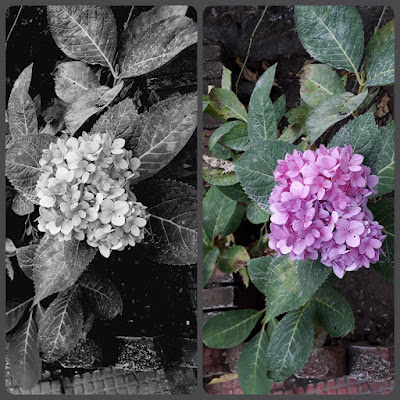
This side-by-side is not just art, it speaks of hope and time, That even through the darkest days, your colors will still climb.

In a world of grayscale sighs, where silence softly weeps,
A bloom stood still in quiet grace, where color gently sleeps.
Its petals pale in whispered tones, a dream not yet unfurled,
As if it waited for the sun to bring it back to world.

Then came a breath, a morning light, and color kissed the leaves,
From ghostly grey to violet bright — a miracle that breathes.
The same flower, yet so alive, once bathed in moon’s despair,
Now dances bold with hues of joy, in fragrant summer air.

This side-by-side is not just art, it speaks of hope and time,
That even through the darkest days, your colors will still climb.
For every bloom that's lost in black, a purple waits to shine,
A gentle nudge from nature’s brush: “Your season will be fine.”

Monday, May 12, 2025

Karma Theory


Karma Theory: What You Give, That You Get

Introduction

The ancient law of karma, deeply rooted in Hinduism, Buddhism, Jainism, and Sikhism, is a fundamental spiritual concept that transcends religion and philosophy. It operates on a simple yet profound premise: what you give is what you get. Karma, a Sanskrit word meaning “action” or “deed,” implies that every thought, word, or act has consequences. This cosmic principle is not about punishment or reward in the conventional sense but about balance, justice, and natural order.

In the modern world, where actions often seem disconnected from consequences, karma reminds us that every choice ripples out into the universe and eventually returns to us. Whether it's kindness, cruelty, honesty, or deceit—our energy returns, in kind, in due time.


The Law of Cause and Effect

At the heart of karma is the law of cause and effect. Every action (cause) generates a corresponding reaction (effect). This is not merely about outward actions but includes intentions and thoughts. A person who consistently acts with compassion and generosity sets in motion a chain of events that brings similar experiences into their life. Conversely, acts rooted in selfishness, hatred, or dishonesty often lead to pain, conflict, or loss.

The law does not operate with immediate results. Karma is subtle and patient. Sometimes its effects are visible instantly; other times, they unfold across months, years, or even lifetimes. The key is that the universe keeps perfect records. Nothing is ever truly lost or forgotten.

Types of Karma

In Eastern philosophy, karma is not a monolithic concept. It is often divided into three main types:

  1. Sanchita Karma – the accumulated karma of past lives.
  2. Prarabdha Karma – the portion of karma from the past that is ripe and is being experienced in this lifetime.
  3. Kriyamana Karma – the karma we are creating in this moment through our current thoughts and actions.

These distinctions show that karma is both cumulative and immediate. While we cannot change the past, we can influence the present and the future through conscious choices. This empowers us to take responsibility for our lives.

What You Give: Energy in Action

The principle of “what you give, that you get” aligns karma with the energetic flow of the universe. Giving does not mean just physical offerings—it includes the energy behind our actions: love, support, truth, encouragement, or even negativity, manipulation, or judgment.

If we give kindness, we often receive kindness—maybe not from the same person, but from another source or at another time. The same holds true for negative actions. It is like planting seeds: what you sow is what you eventually reap.

Imagine your actions as echoes. When you shout into a canyon, the sound comes back to you. Karma works similarly. Whether you send out compassion or cruelty, it returns to its source—you.

Real-Life Applications

In daily life, karma serves as a moral compass. Consider a workplace: if a manager treats their employees with respect and fairness, they are likely to receive loyalty and productivity in return. In relationships, a person who loves unconditionally often experiences deeper connection and trust. On the other hand, betrayal or deceit often returns as mistrust or loneliness.

Even in small acts—like helping a stranger, being patient in traffic, or choosing to speak the truth when it’s hard—we shape the kind of energy that surrounds us. These small acts accumulate, creating a karmic bank balance that influences our future.

Karma and Free Will

A common misconception is that karma is fatalistic—that people are doomed by their past actions. But karma is not destiny. While it may influence our circumstances, it does not bind us helplessly. Free will plays a crucial role.

We are not just passive recipients of karma. We are active participants in shaping it. At any moment, we can choose a different path. If past actions brought suffering, we can learn from them and create better karma going forward. Spiritual practices like meditation, self-reflection, prayer, and forgiveness can also help cleanse negative karmic patterns.

Breaking the Karmic Cycle

Karma is also a cycle—a wheel of action and reaction. Spiritual evolution comes from recognizing this cycle and rising above it. When we act with true selflessness, without expectation of reward, we begin to transcend the karmic loop. This is known in the Bhagavad Gita as nishkama karma—action without attachment to outcomes.

Forgiveness is another powerful tool. Holding onto anger or revenge creates more negative karma. Letting go and choosing compassion helps release us from the karmic grip.

Karma in Spiritual Teachings

In Hinduism, karma is linked to dharma (righteous duty). Performing one’s duties without selfish desires purifies the soul. In Buddhism, karma is one of the driving forces of samsara—the cycle of birth, death, and rebirth. The goal is to reach Nirvana, where karma no longer binds the soul. In Jainism, karma is seen as subtle matter that attaches to the soul, and liberation comes through non-violence and self-discipline.

Even in Western philosophies and spiritual teachings, similar concepts exist. The Bible says, “As you sow, so shall you reap.” The law of attraction in modern spirituality echoes the same principle: the energy you emit is the energy you receive.


Modern Relevance

In an age of rapid change and moral ambiguity, the theory of karma remains a grounding force. It teaches personal accountability in a world where blame-shifting is common. It offers hope—because if our current situation is shaped by our past actions, we can shape our future by today’s choices.

Karma also encourages empathy. When we recognize that others are also navigating their karmic journeys, we become less judgmental and more compassionate.

Conclusion

The theory of karma, encapsulated in the phrase “what you give, that you get,” is a timeless truth. It is not a tool for fear or control but a guide for conscious living. Every act, every word, and every thought is an offering to the universe—and the universe responds in kind.

By giving love, truth, integrity, patience, and kindness, we shape not only our destiny but the collective energy of the world. In this way, karma becomes a path not just of justice, but of growth, healing, and harmony.

Let us then walk this path with awareness—planting seeds of goodness—knowing that the harvest will return to us in time, in form, and in spirit.

 #karmatheory