google.com, pub-1946644689891759, DIRECT, f08c47fec0942fa0 FLUX OF THOUGHTS

Sunday, May 14, 2023

Psychology of relationship

The psychology of relationships refers to the study of how individuals think, feel, and behave within the context of their relationships with others. It examines the psychological processes and dynamics that influence the formation, maintenance, and dissolution of various types of relationships, such as romantic partnerships, friendships, family relationships, and professional relationships.

Psychologists who specialize in relationship psychology explore a range of topics related to interpersonal connections, including attraction, love, intimacy, communication, conflict resolution, attachment styles, and relationship satisfaction. They investigate the cognitive, emotional, and behavioural factors that contribute to the success or failure of relationships, as well as the impact of relationships on individuals' mental health and well-being.


Ten general psychological facts about relationships:


1.     🗣 Communication is key: Effective communication is vital for healthy relationships. Open and honest dialogue promotes understanding, connection, and conflict resolution.

2      💌Love is a chemical reaction: Falling in love triggers the release of various chemicals in the brain, including dopamine, oxytocin, and serotonin, which contribute to feelings of happiness and attachment.

3       🤲Attachment styles influence relationships: Our attachment styles, shaped by early experiences, impact how we form and maintain relationships. These styles include secure, anxious, and avoidant attachments.

          🙍Emotional support matters: Providing emotional support to our partners fosters a sense of security and strengthens relationship bonds. Being there for each other during challenging times promotes a deeper connection.

          👫Trust is essential: Trust forms the foundation of healthy relationships. Building and maintaining trust requires honesty, reliability, and consistency over time.

          😡😈Conflict is normal: Disagreements and conflicts are natural in relationships. How we handle them—through effective communication, compromise, and empathy—determines relationship satisfaction and growth.

7          💏Intimacy goes beyond physicality: Emotional and psychological intimacy are equally important as physical intimacy. Sharing thoughts, fears, dreams, and vulnerabilities deepens emotional connections.

            💞Relationship satisfaction fluctuates: Relationship satisfaction tends to fluctuate over time. It is influenced by various factors such as communication, shared values, mutual respect, and the ability to adapt to changes.

            💅💆Self-care supports healthy relationships: Taking care of our physical and mental well-being directly impacts our ability to contribute to a healthy relationship. Prioritizing self-care promotes a more fulfilling partnership.


Relationship quality affects overall well-being: The quality of our relationships significantly influences our overall well-being and happiness. Positive and supportive relationships contribute to better mental health and life satisfaction.

Remember that these psychological facts provide general insights, and individual experiences may vary. Building and maintaining healthy relationships requires ongoing effort, understanding, and a willingness to grow together.


#psychology
#relationships

Sunday, April 30, 2023

Exploring the Fascinating World of Tarot


The tarot, also known as 'trionfi' and later 'tarocchi; or 'tarocks', is a deck of playing cards that has been used in different regions of Europe since at least the mid-15th century to play card games like Tarocchini. From their Italian origins, tarot playing cards spread throughout most of Europe, developing into a family of games that includes contemporary games like French Tarot and Austrian Königrufen as well as German Grosstarok. Intricate rituals were created by French occultists in the late 18th century.

Another legend holds that Tarot decks were created in Italy in the 1430s by adding a fifth suit of 21 artistically designed cards called trionfi ("triumphs") and an odd cardknown as il matto ("the fool") to the already existing four-suited pack.


However, The oldest tarot allusions all originate from the 1440s and 1450s and are located inside the quadrilateral established by the northern cities of Venice, Milan, Florence, and Urbino. Because of the game's complexity at the time, it is likely that it had began to evolve earlier in the century. Tarot cards used the normal Italian suits, with values ranging from 10 to 1 and four face cards (king, queen, knight, and knave), for a total of 56 cards. They were joined by a fool (matto), which served as a wild card, and the 21 trump cards.

Created using Canva

Here are some interesting facts about them:


🌞  The origins of tarot cards are unclear, but they are believed to have originated in northern Italy in the 15th century.

🌛  The original purpose of tarot cards was as playing cards, not for divination.

  The tarot deck consists of 78 cards, with 22 cards in the Major Arcana and 56 cards in the Minor Arcana.

  Each card in the Major Arcana has a specific meaning and represents a different archetype or universal theme.

  The Minor Arcana cards are divided into four suits: Swords, Cups, Wands, and Pentacles, and each suit has 14 cards.

🌘  Tarot cards have been used for divination and fortune-telling since the late 18th century.

🌄  Different cultures have their own versions of tarot cards. For example, the Lenormand* deck originated in Germany and is used for divination in France.

🌓  The Rider-Waite-Smith tarot deck** is one of the most popular and widely used tarot decks in the English-speaking world. It was created in 1909 by Arthur Edward Waite and artist Pamela Colman Smith.

🌅  Tarot cards have been featured in popular culture, such as in movies and TV shows like "The Chilling Adventures of Sabrina" and "The Magicians."

🌜  Tarot reading is still a popular practice today and is used by people all over the world for spiritual guidance, self-reflection, and personal growth.


*Lenormand cards deck: This included the Petit Lenormand, or simply "Lenormand cards," a deck of 36 illustrated cards that is still widely used today. It is frequently used for divination in France, the Low Countries, Central Europe, the Balkans, and Russia.

**The most well-known Tarot deck is the Rider-Waite Tarot. Pamela Colman Smith created the vivid cards, which feature whole sceneries with individuals and symbols, in 1909 under the direction of Arthur Edward Waite.

Order one for you
 
#tarotstory
#tarotdeck
#historyoftarot

Sunday, March 12, 2023

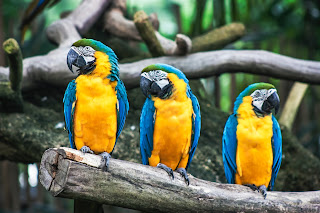
Facts about Parrots

 With their lovable and naughty personalities, parrots stand out in the bird world.

These vibrant birds are far more than just a pretty face; they are vibrant, intelligent, sociable, and long-lived creatures.

Photo by : Sid Balachandran
🦜🦜🦜🦜🦜🦜🦜🦜🦜🦜


There are nearly 350 to 400 parrot species worldwide, but many of them have become endangered.

Here are some fascinating facts about parrots:

🦜Parrots imitate sound to blend in with their surroundings. They lack vocal cords, so they use the muscles in their throats to direct air differently, allowing them to mimic sounds like a ringing phone, creaking door, or barking dog.


🦜🦜Parrots learn quickly and effectively. They can associate words with objects and situations, and they can even use tools to solve problems.


🦜🦜🦜The larger the parrot, the longer their lifespan.
The African Grey, for example, is known to live well past the age of 60. Macaws typically live between 25 and 50 years.
Pet parrots typically live longer than wild parrots because they face fewer predators and diseases.


🦜🦜🦜🦜When a male and female parrot pair up, they usually stay together, even when the breeding season is over. Even when the breeding season is over, parrots practise monogamy. They forage, groom, and sleep together most of the time. They are done once they find their mate.


🦜🦜🦜🦜🦜Parrots are the only bird species that can eat with their feet. They can grab their food with one foot and move it up to their beak to nibble on it. This is due to the fact that parrots have zygodactyl feet, which have four toes on each foot, two facing forward and two facing backward.


🦜🦜🦜🦜🦜🦜Parrots have a curved and strong beak, with the top part being larger than the bottom. The beaks of the largest macaws are so powerful that they can crush a Brazil nut and even break open metal cages.


🦜🦜🦜🦜🦜🦜🦜The Kakpo Parrots This is the largest type of parrot, weighing up to 9 pounds and growing to be over 2 feet long. It is also the only nocturnal parrot, owing to the fact that it can escape prey more easily at night. Unfortunately, the kakapo is now one of the most endangered birds.


✋A pandemonium is a group of parrots. The word "pandemonium" simply means "noisy and wild," which is a fitting name for this group of chatterboxes.


#parrots
#fatcsparrots
#article

Sunday, February 12, 2023

Not just Valentine's Day


VALENTINE'S DAY, also known as St. Valentine's Day, is celebrated on February 14th, when lovers express their love with greetings and gifts. But, there's more to this day. There are few stories behind this day:


💖The holiday derives from the Roman festival of Lupercalia, which takes place in February. The festival, which celebrated the arrival of spring, included fertility rites and the lottery pairing of women and men. 

Lupercalia was an ancient Roman fertility festival held in mid-February. This feast of debauchery was dedicated to Faunas, the Roman god of agriculture, and the Roman founders Romulus and Remus, and included a ritual in which an order of Roman priests ran through the streets, "gently slapping" women with the blood-soaked hides of sacrificed animals, which they believed promoted fertility. Women would later be paired with men "by lottery."

The celebration of Lupercalia was replaced by St. Valentine's Day at the end of the fifth century, but the true origin of the holiday is hazy at best. Valentine's Day did not become popular as a romantic holiday until the 14th century.

💖💖Pope Gelasius declared February 14th St. Valentine's Day at the end of the fifth century, and since then, February 14th has been a day of celebration—though it was generally more religious than romantic.

St. Valentine's Day was a Catholic feast day that was added to the liturgical calendar around 500 AD. The day was named after the martyred saint Valentine.

Saint Valentine was a Roman priest who performed weddings for soldiers who were forbidden to marry due to a Roman emperor's edict declaring that married soldiers did not make good warriors and thus young men could not marry. This Saint Valentine wore a ring with a Cupid on it, a symbol of love that soldiers used to identify him. In a forerunner to greeting cards, he distributed paper hearts to remind Christians of their devotion to God.

Saint Valentine became known as the patron saint of love as a result of this legend. The Saint Valentine prayer requests that Saint Valentine unite lovers so that two become one and the couple remembers their devotion to God.

💖💖💖It's not just St. Valentine's Day! Cupid, the winged baby boy frequently seen on Valentine's Day cards and merchandise, is another symbol of this love-filled holiday, and it's easy to see why. Cupid was the son of Venus, the goddess of love and beauty, in Roman mythology. He was known for shooting arrows at both gods and humans, causing them to fall madly in love.

💙💚💛💜💝💗

Valentine's Day is celebrated in various parts of the world :

💕South Korea and Japan: On Valentine's Day, women in Japan make the first move. When women buy chocolates for their male partners on Valentine's Day, it is the men who are treated to a special day.

💕Brazil - Instead of February 14, Brazilians celebrate Saint Anthony, the patron saint of marriage and matchmaking, on June 12.

💕Argentina: If you're a fan of Valentine's Day, Argentina is the place to be! They celebrate on February 14th, and then for an entire week in July—sweetness week—ending with Friendship Day.

💕China: China celebrates Valentine's Day on February 14th, but they also have their own traditional day. Qixi Festival occurs on the seventh day of the seventh lunar month, which is usually in August.

💕Taiwan : Taiwan celebrates Valentine's Day and White Day, but they also have their own special day of love on July 7th. Men give beautiful flowers to women on this traditional holiday, and the color and number of flowers sent have different meanings.

💕Ghana : Ghana celebrates National Chocolate Day on February 14th. Tastings, dinners, and other events are held throughout Ghana to promote the country's top agricultural export, the cocoa bean.

💕Slovenia: Since St. Valentine is one of the patron saints of spring, February 14 is regarded as one of the best days for working in the fields in Slovenia. Slovenians typically commemorate romance on St. Gregory's Day, which falls on March 12, one month later.


#valentine'sday
#monthoflove
#loveisintheair

Sunday, January 22, 2023

World of Optical Illusion


Your eyes are incredible organs. Did you know that if you have blue eyes, you share an ancestor with everyone else on the planet? Blue eyes are the result of a genetic mutation that appeared more than 6,000 years ago. Originally, all humans had brown eyes.

Optical illusions come in a variety of shapes and sizes, and we can't get enough of them. Many optical illusions reveal fascinating secrets about how our vision and brains work, as well as how we perceive color and light, while others are simply perplexing.

They're popular on social media right now, but optical illusions are nothing new. Optical illusions have been delighting and perplexing people for centuries and in many different cultures.

There are several types of optical illusions, and the majority of them fall into one of four categories. The first are physiological optical illusions. These are the 'true' optical illusions: images that cause us to misinterpret them, such as a still image that appears to be moving or an image that appears to be a specific color when it isn't. These are caused by physiological factors in how our eyes and brains interpret things like brightness, angles, and movement.

For centuries, people have been fascinated by optical illusions. Plato and other Greek philosophers described them as tricks played on us by our senses and minds. W.E. Hill, a famous cartoonist, embraced the phenomenon of optical illusions by skillfully sketching a picture that was simultaneously two images by the nineteenth century. Your perception determined the figure you saw. It could have been a young girl or an elderly woman.